
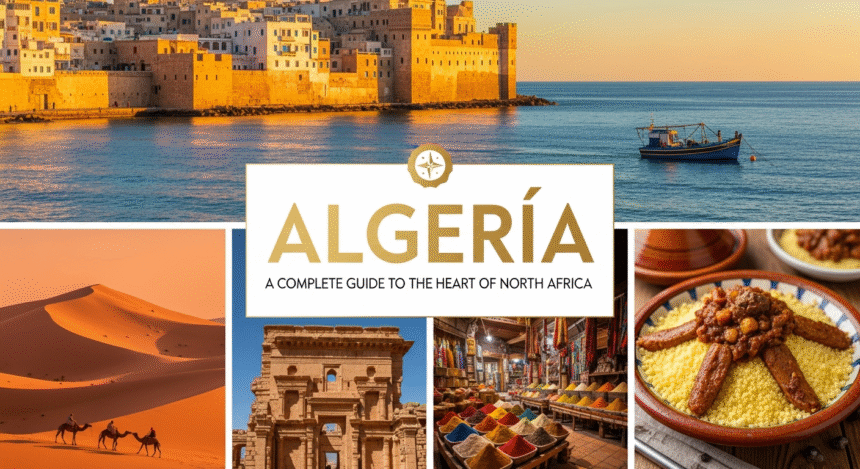
Algeria is a fascinating country located in North Africa. It is the largest country in Africa by land area, full of natural beauty, history, and culture. People often ask, “Where is Algeria?” It sits along the Mediterranean coast and stretches deep into the Sahara Desert. With its rich culture, vibrant cities, and unique traditions, Algeria is a country everyone should know about. In this guide, we will explore everything from the Algeria flag to its people, language, and the upcoming Eid al-Adha 2025 date in Algeria.
Where is Algeria?
Algeria is in North Africa, bordered by Tunisia, Libya, Niger, Mali, Mauritania, Western Sahara, and Morocco. It has a long Mediterranean coastline to the north. This location gives Algeria a mix of desert landscapes, mountains, and fertile coastal areas. On an Algeria map, you can see the Sahara Desert covering more than 80% of the country. Algeria’s strategic location makes it a bridge between Africa and Europe, which has influenced its culture, economy, and history.
Algeria Map – Geography at a Glance
The Algeria map shows a vast and diverse country. Northern Algeria is mountainous, including the Tell Atlas range. The Sahara dominates the south, with sand dunes and oases. Major cities like Algiers, Oran, and Constantine are mainly in the north. Rivers like the Chelif and M’zab provide water for agriculture. Knowing Algeria’s geography helps travelers, students, and geography enthusiasts understand its climate, culture, and way of life.
Algeria Capital – Algiers
The capital of Algeria is Algiers, also called “Alger” in French. It is a coastal city with stunning Mediterranean views, white buildings, and a rich history. Algiers is the political, economic, and cultural hub of the country. The city is famous for its old town called the Casbah, historic mosques, and vibrant markets. Anyone asking, “What is the capital of Algeria?” should remember Algiers is the heart of this beautiful country.
Algeria Flag – Symbolism and Colors
The Algeria flag has two vertical stripes: green and white. A red crescent and star are in the center. The green represents Islam, white symbolizes peace, and red stands for the struggle for independence. The flag reflects Algeria’s history, faith, and values. You will see this flag proudly displayed during national celebrations, including Eid al-Adha 2025 in Algeria.
Algeria People – Culture and Demographics
Algeria people are diverse, including Arabs, Berbers, and other ethnic groups. They are known for their hospitality, love for music, and strong family ties. Many Algerians speak both Arabic and Berber, while French is also widely used. The population is mostly Muslim, shaping festivals, food, and daily life. Algerian culture is a blend of African, Arab, and Mediterranean influences.
Algeria Language – Arabic and Berber
The Algeria language is primarily Arabic, with Berber as a recognized national language. French is also commonly used in business, government, and education. This multilingual environment makes Algeria unique in North Africa. Language connects people to history, traditions, and daily life. Visitors often enjoy learning a few Arabic phrases to interact with locals and explore cultural sites more meaningfully.
Eid al-Adha 2025 Algeria Date
Muslims in Algeria celebrate Eid al-Adha to honor the story of Prophet Ibrahim. The Eid al-Adha 2025 date in Algeria is expected to fall on June 15, 2025, though it may vary by a day depending on moon sighting. Families gather for prayers, feasts, and charity, often sacrificing an animal and sharing meat with the needy. It is one of the most important and widely observed holidays in Algeria.
Algeria vs Uganda – Key Differences
Comparing Algeria vs Uganda shows how diverse Africa is. Algeria is North Africa’s largest country with a desert climate, while Uganda in East Africa is smaller with tropical forests and lakes. Algeria’s population is about 45 million, while Uganda has over 48 million people. Algeria speaks Arabic and Berber; Uganda uses English, Swahili, and many local languages. These differences highlight the continent’s cultural and geographical variety.
Algeria’s History – A Rich Timeline
Algeria has a long history of civilizations, from ancient Berbers to the Roman Empire. It later became part of the Ottoman Empire before French colonization in the 19th century. Algeria gained independence in 1962 after a long struggle. Today, its history is visible in architecture, traditions, and national pride. Understanding history gives context to Algeria’s culture, language, and political system.
Tourism in Algeria – What to See
Tourists in Algeria enjoy the Sahara Desert, historic cities, and Mediterranean beaches. The Casbah of Algiers is a UNESCO World Heritage Site. Constantine has bridges and ancient architecture. Oran offers vibrant nightlife and coastal views. Nature lovers can visit Tassili n’Ajjer National Park with prehistoric rock art. Algeria’s diversity makes it a unique destination for travelers seeking both adventure and culture.
Algeria Economy – Key Industries
Algeria’s economy depends heavily on oil and natural gas. Agriculture, manufacturing, and tourism are also growing. The government invests in infrastructure and renewable energy. Understanding Algeria’s economy helps explain its global role and local lifestyle. For example, cities like Algiers thrive on trade and business, while southern regions depend on desert resources and farming.
Algeria Cuisine – Delicious Traditions
Algerian cuisine is flavorful and diverse. Couscous is the national dish, often served with meat and vegetables. Other popular foods include brik, tajine, and pastries like makroud. Food is central to Algerian culture, especially during festivals like Eid al-Adha 2025 in Algeria, where families prepare large feasts and share meals with neighbors.
Algeria Biography Table
| Attribute | Details |
| Country Name | Algeria |
| Capital | Algiers |
| Population | ~45 million |
| Official Languages | Arabic, Berber |
| Other Languages | French |
| Currency | Algerian Dinar (DZD) |
| Major Religion | Islam |
| National Flag | Green & white vertical stripes, red crescent & star |
| Location | North Africa, Mediterranean coast |
| Borders | Tunisia, Libya, Niger, Mali, Mauritania, Western Sahara, Morocco |
| Climate | Mediterranean north, desert south |
| Independence | July 5, 1962 |
| Major Cities | Algiers, Oran, Constantine, Annaba |
| Famous Festival | Eid al-Adha, Ramadan celebrations |
| Main Industries | Oil, gas, agriculture, tourism |
FAQs
Q1: What is the capital of Algeria?
The capital of Algeria is Algiers, located on the Mediterranean coast.
Q2: When is Eid al-Adha 2025 in Algeria?
Eid al-Adha 2025 in Algeria is expected on June 15, 2025, depending on moon sighting.
Q3: What languages are spoken in Algeria?
Arabic and Berber are official languages, with French widely used in business and education.
Q4: Where is Algeria on the map?
Algeria is in North Africa, bordered by Tunisia, Libya, Niger, Mali, Mauritania, Western Sahara, and Morocco.
Q5: What does the Algeria flag mean?
The green represents Islam, white symbolizes peace, and red stands for the fight for independence.
Q6: How does Algeria compare to Uganda?
Algeria is larger with a desert climate; Uganda is smaller, tropical, and more forested with lakes.
Conclusion
Algeria is a country of beauty, history, and culture. From its bustling capital Algiers to the vast Sahara Desert, it offers something for everyone. Understanding its people, language, flag, and festivals like Eid al-Adha 2025 in Algeria gives deeper appreciation of this North African gem. Whether you are traveling, studying, or simply curious, Algeria is a land worth exploring.