
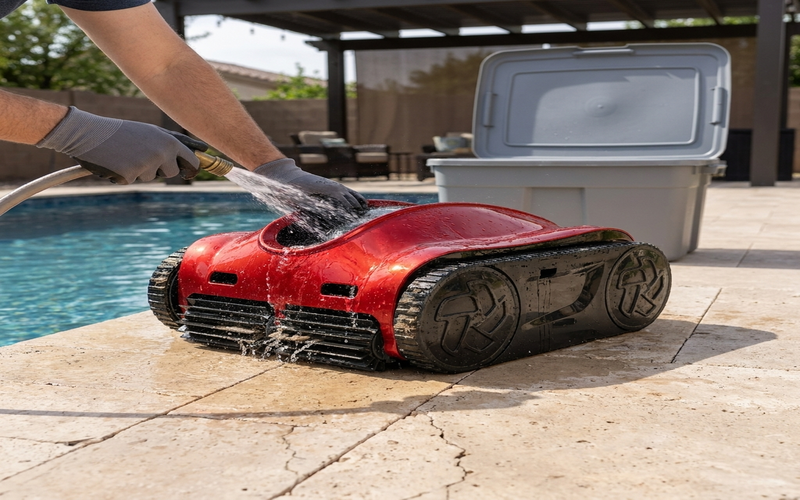
A robotic pool cleaner works in a hard environment. It moves through water, collects debris, climbs walls, and handles dirt, sand, leaves, and fine particles week after week. Many pool owners focus on cleaning power first. That is understandable. Good cleaning results matter. But long-term ownership depends on something else too. It depends on how the cleaner is handled between cycles.
A lot of wear does not come from one big failure. It comes from small habits that repeat over time. Pulling the cleaner out roughly, leaving debris packed in the filter, letting residue dry on the body, or storing the unit in heat and moisture can all add up. None of these habits may seem serious on one day. Over a full season, though, they can affect parts, surfaces, movement, and overall performance.
The good news is that better habits are not complicated. A few simple changes in retrieval, rinsing, and storage can help reduce avoidable wear and keep the cleaner in better shape over time.
Why Everyday Handling Matters More Than Many Owners Think
Most robotic pool cleaners are built for regular pool use. That does not mean they should be treated carelessly. The cleaner spends a lot of time in water and around debris. That alone creates normal wear. If poor handling is added on top of that, stress increases faster.
Wear Usually Builds Slowly
In many cases, the cleaner does not break all at once. Instead, owners may notice small changes over time. The unit may start looking older sooner than expected. Wheels may collect more residue. The filter area may become harder to clean. Movement may feel less smooth. These issues often come from daily habits more than dramatic misuse.
Small Actions Repeat Hundreds of Times
That is the key point. Pool owners do not retrieve and clean the unit once. They do it again and again. A habit that seems minor becomes much more important when it is repeated through a full season.
Retrieval Habits Can Either Protect or Stress the Cleaner
Taking the cleaner out of the pool sounds simple, but this is one of the easiest places to create avoidable wear. A unit that is lifted too fast, dragged across rough surfaces, or dropped heavily after removal may age faster than expected.
Do Not Pull It Out Carelessly
When the cleaner finishes a cycle, owners often want to remove it quickly and move on. That can lead to rough handling. The cleaner may still contain water and debris, which makes it heavier than it looks. Pulling it up too fast can create extra strain during retrieval.
A better habit is to lift it in a controlled way and allow excess water to drain before fully moving it away from the pool. That reduces sudden weight stress and makes the process easier to manage.
Avoid Dragging It Across Hard Surfaces
Once the cleaner is out of the water, it should not be dragged across concrete, stone, rough decking, or other abrasive surfaces. Repeated dragging can wear down parts of the housing and create unnecessary surface damage.
Instead, place it on a stable surface gently. This sounds obvious, but it is one of the easiest ways to reduce cosmetic and physical wear.
Be Careful Near Pool Edges and Steps
Pool edges can create awkward retrieval angles. Steps and ledges can do the same. Owners should slow down in these moments rather than forcing the cleaner into a fast removal path. A little patience protects the unit better than speed does.
Rinsing Helps More Than Just Cleanliness
Many owners rinse the cleaner because it looks dirty. That is a good start, but rinsing also plays a bigger role. It helps remove residue that would otherwise stay on the cleaner between uses.
Pool Water Leaves More Behind Than People Expect
After a cycle, the cleaner may carry:
- chlorine or salt residue
- fine dust
- pollen
- sand
- small leaf fragments
- mineral residue
If these materials dry on the cleaner, they can become harder to remove later. Over time, this may affect filter areas, brushes, wheels, and outer surfaces.
Fresh Water Rinsing Should Be Routine
A fresh water rinse after use helps wash away that residue before it hardens. This does not need to be an intense cleaning session every time. A simple and steady rinse is often enough. The important part is doing it consistently.
Do Not Forget the Hidden Areas
Owners often rinse only the obvious outside surfaces. That is not enough. It helps to check:
- the filter compartment
- around the brushes
- wheel areas
- intake openings
- underside corners
These are common places where debris and residue collect. If they are ignored too often, wear and buildup can increase.
Filter Cleaning Reduces Stress on the Whole Unit
A dirty filter is not just a performance problem. It can also contribute to wear because the cleaner has to keep operating with restricted flow.
Packed Debris Should Not Sit for Long
Leaves, dirt, and fine particles should not stay in the filter after the cycle ends. If they remain there, they may dry, compact, and become harder to remove later. That makes the next cleaning session harder on both the owner and the cleaner.
Clean Filters Support Better Long-Term Use
When the filter is cleaned regularly, the cleaner can keep working in a more normal condition. That matters because routine strain often rises when debris is left packed inside for too long.
A unit such as the iGarden wall climbing robotic pool cleaner may be selected for demanding cleaning ability, but even strong cleaners benefit from simple filter care. Good performance lasts longer when debris is removed promptly and the cleaner is not forced to operate around avoidable buildup.
Storage Habits Can Prevent Off-Cycle Damage
A robotic cleaner does not only wear down when it is in the pool. Storage matters too. In fact, poor storage can create problems even when the cleaner is not being used at all.
Do Not Leave It in Harsh Conditions
One common mistake is leaving the cleaner in direct sun for long periods. Heat and UV exposure can increase wear on external materials over time. Another mistake is leaving it in a damp, closed place without proper drying. Trapped moisture can lead to residue, odor, or unnecessary stress on parts.
A better approach is to store the cleaner in a shaded, dry, and ventilated area.
Let It Dry Before Long Storage
If the cleaner is being stored for more than a short period, it should be rinsed and allowed to dry first. This is especially important after heavy use or during off-season storage. Keeping moisture trapped inside the unit is never ideal.
Keep It Off Rough or Dirty Ground
Storage should also protect the unit from avoidable contact with dirt, rough concrete, or cluttered equipment piles. A stable shelf, storage stand, or clean protected space is usually a better choice.
Better Habits Add Up Over Time
The biggest advantage of good handling habits is not dramatic. It is gradual. The cleaner stays easier to use. It stays easier to clean. It often looks better and performs more predictably over time.
Focus on What You Can Control
No pool cleaner stays new forever. Normal use creates normal wear. But owners can reduce unnecessary wear by controlling the habits that happen after every cycle.
That means:
- retrieve the cleaner gently
- let excess water drain
- rinse with fresh water
- clean the filter promptly
- store the unit in a dry and shaded place
These steps are simple, but they protect the cleaner far more than many owners realize.
Final Thoughts
Reducing wear on a robotic pool cleaner is not mostly about avoiding rare accidents. It is about improving regular habits. Better retrieval reduces stress. Better rinsing removes harmful residue. Better storage protects the cleaner when it is not in use.
Over time, these habits can make a meaningful difference. They support better condition, easier maintenance, and more reliable day-to-day use. For pool owners, that is often the smartest way to protect the value of the cleaner without adding much extra work at all.